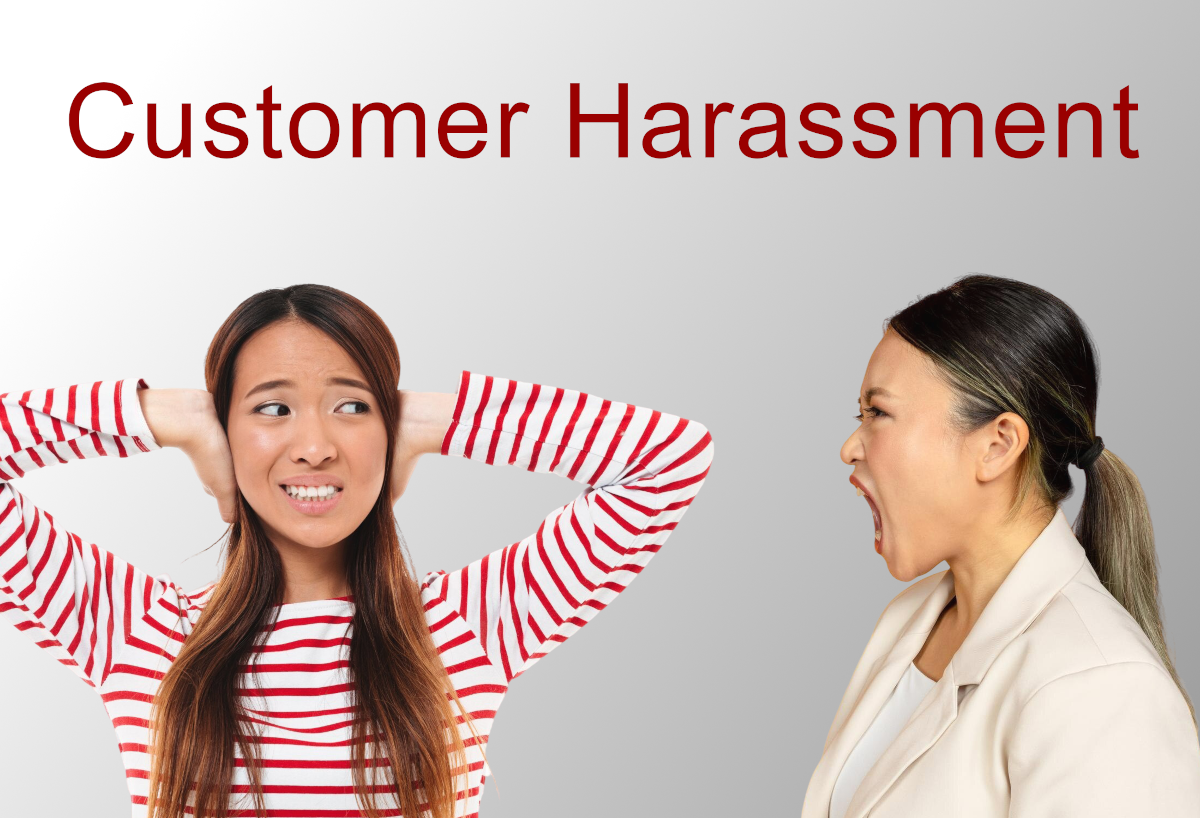
In 2013, a shopper found a small hole in a blanket she had bought at an apparel store in Japan. A real defect, and any store would have exchanged it. Instead, she demanded the clerk perform “dogeza”, the kneeling, forehead-to-floor apology that sits at the extreme end of Japanese apology culture, then photographed it and posted the picture online with the clerk’s and store’s names. The Tokyo District Court fined her 300,000 yen.
Ten years later, a man forced the same apology from a delivery company manager after two genuine mis-deliveries, filming it as well. He received a suspended prison sentence for coercion.
Both customers had legitimate complaints. Both broke the law anyway. That is the question HR teams in Japan are actually asking ahead of this October: where exactly is the line between a demanding customer and kasu-hara?
Kasu-hara is the Japanese contraction of “customer harassment,” and it follows pawa-hara (power harassment, abuse by superiors) and seku-hara (sexual harassment) as the third major harassment category to move from media shorthand into labor law. The pattern it names grew partly out of Japan’s demanding service culture, where the saying “okyakusama wa kamisama” (the customer is a god) is far more often quoted by customers, instead of the service industry that coined it.
What Changes on October 1
From October 1, 2026, customer harassment prevention becomes a legal obligation for every employer in Japan, down to a single employee. That includes foreign-owned companies and Japan branches; there is no size or nationality exemption.

The amended Labor Policy Comprehensive Promotion Act, detailed in guidance published this February by the Ministry of Health, Labor and Welfare (MHLW), requires a stated company position, a consultation channel employees can actually use, a defined response to incidents, and a protocol for serious cases, including when to involve police or refuse service. That part is documentation. The hard part is judgment, and judgment is what the guideline cannot write for you.
Where the Line Falls
The MHLW framework asks two questions.
- Is the demand itself reasonable, given what actually went wrong?
- And even if it is reasonable, is the manner of pressing it acceptable?
The blanket case fails the second test, not the first. The complaint was valid; the forced kneeling and public shaming were crimes. Persistence alone can also cross the line: in 2019, a man was arrested after making over 400 calls in eight days to the customer line of KDDI, one of Japan’s major telecom carriers. No single call was criminal. The volume was.
Nor is this a retail problem. In 2022, a district court in Nagano ruled on a hospital department head who repeatedly threatened and assaulted two medical device salespeople, who endured it because the hospital was their company’s largest client. The hospital itself was held liable as his employer.
Harassment between companies is fully in scope, which cuts both ways: your staff are protected from abusive clients, and your own managers’ behavior toward vendors is now your compliance problem.
What the law does not do is make ordinary complaints risky. A customer who raises a genuine failure in a normal manner keeps every protection they have today. Staff who know where the line is stop treating every unhappy customer as a threat.
The Second Line: Drawn Within the Company
In 2018, the Kofu District Court ruled on an elementary school teacher bitten by a dog during a home visit. Injured and blameless, he mentioned the family’s pet liability insurance; they complained, and the principal sided with them, criticized the teacher one-sidedly, and had him kneel and apologize. The teacher fell into depression, and the court awarded roughly 2.7 million yen in damages.
Strictly speaking, that is a power harassment ruling; the family was never a defendant. Which is exactly the point. The harassment began outside the school and became illegal inside it, in how the principal responded. Mishandled customer harassment converts into power harassment, and the liable party is the employer. The customer did not break the employee. The manager’s response did
The mirror image: in 2022, the Tokyo High Court rejected a duty-of-care claim from an employee of an NHK-affiliated service center who had suffered harassment from the public, specifically because her employer already had countermeasures in place and had used them.

After October 1, the Kofu pattern of appeasing the complainant at the employee’s expense becomes evidence of noncompliance on top of the existing power harassment exposure. The NHK pattern becomes a legal safe harbor. Same law, two directions.
What to do before October
In a 2024 survey of 33,000 service industry workers by UA Zensen, Japan’s largest service-sector union federation, the most common response to harassment in the moment was to keep apologizing: 35.9 percent, just ahead of responding firmly. A policy document does not move that number. Rehearsed behavior does.
If you can only change one thing this quarter, brief your managers on the first conversation after an employee reports. The opening line cannot be a version of “what did you do to upset them?” That question is how a company slides toward the Kofu ruling. Listen, record, and take the burden off the employee the same day. Frontline staff need one rehearsed boundary sequence: acknowledge the legitimate core of the complaint, state the limit, hand off to a manager. A handoff is not abandonment, and in a workplace where enduring difficult customers has long been read as professionalism, staff need explicit permission to use it.
The line gets drawn twice. Courts in Japan have drawn the first one for years. The second is drawn inside your company, in the first minutes after someone reports. Your employees already know where it should be. From October, the law expects you to say it out loud.